At-home whitening kits work by holding a peroxide gel against the teeth long enough to break down stains inside the enamel. The ones that work, whitening strips and dentist-supplied custom trays, contain 6 to 14 percent hydrogen peroxide (or 10 to 22 percent carbamide peroxide) and lighten teeth by two to five shades over one to three weeks, for $20 to $500. LED lights, charcoal, “enamel-safe” peroxide-free kits, and whitening pens either add nothing or do not whiten at all. The main side effect is temporary sensitivity, and used as directed, peroxide whitening does not damage enamel.
How whitening works
Teeth stain in two layers. Surface stains from coffee, tea, wine, and smoking sit on the enamel and come off with abrasive toothpaste or a professional polish. Deeper discolouration is inside the enamel and dentin and needs a bleaching agent. Hydrogen peroxide (and carbamide peroxide, which breaks down into hydrogen peroxide) penetrates the enamel and oxidises the coloured molecules, making them colourless. The higher the concentration and the longer the contact, the greater the effect, and the more sensitivity.
Dentist in-office whitening uses 25 to 40 percent hydrogen peroxide for an hour. Home products use much less, over more sessions. The end result after a full course is often similar; the difference is speed. Our teeth whitening guide compares in-office and home options in full.
The types, ranked by evidence
1. Custom trays from a dentist ($200 – $500). Trays moulded to your teeth, filled with 10 to 22 percent carbamide peroxide gel and worn for one to several hours a day (or overnight) for one to three weeks. The best-studied home method and the most effective, because the tray holds gel evenly against every tooth and keeps saliva out. Reusable for years; refill gel costs $20 to $40.
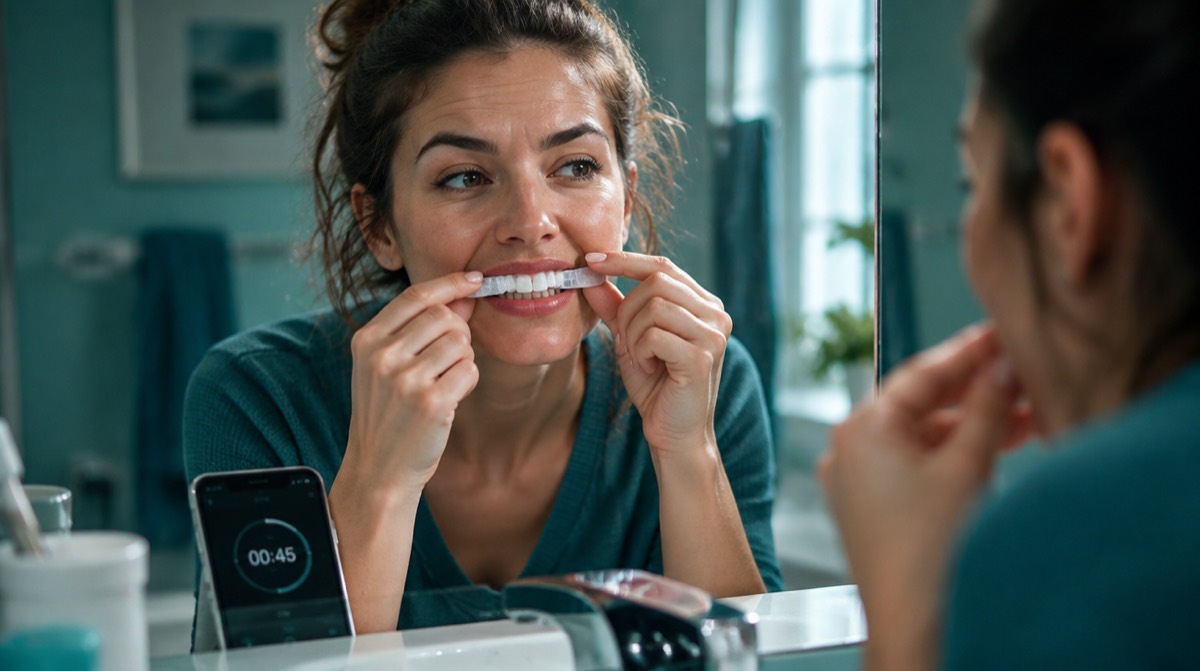
2. Whitening strips ($20 – $60). Thin plastic strips coated in 6 to 14 percent hydrogen peroxide, worn 30 minutes a day for one to three weeks. Backed by decent trials and endorsed by the ADA Seal on some brands. Less even coverage than a custom tray, they can miss the edges and the spaces between teeth, but clearly effective. The best value for most people.
3. Pre-filled or boil-and-bite trays ($30 – $150). One-size trays containing peroxide gel. Work on the same principle as custom trays with worse fit: gel leaks onto gums, coverage is patchy. Some ADA-accepted products exist. Moderate results.
4. LED kits ($40 – $200). A mouthpiece with blue LEDs plus a peroxide gel. The gel works; controlled studies find the light adds nothing beyond the gel alone, and some kits use a weak gel and rely on the light for marketing. Judge these by peroxide percentage and ignore the light. If the box does not state a percentage, assume it is low.
5. Whitening pens ($10 – $30). A brush-on peroxide gel with no barrier to keep it on the teeth, so saliva dilutes it within minutes. Useful for touching up a single tooth; not a whitening method.
6. Whitening toothpaste ($5 – $15). Removes surface stains with mild abrasives; some contain low levels of peroxide. Lightens by about one shade at most and cannot change the underlying colour.
7. Peroxide-free “natural” kits, charcoal, oil pulling, baking soda. No mechanism to bleach and no evidence that they do. (Baking soda toothpaste can lift surface stains, though; see baking soda for teeth.) Charcoal is abrasive enough to wear enamel over time, which eventually makes teeth look more yellow, not less.
What to look for on the box
- Peroxide percentage. 6 to 10 percent hydrogen peroxide (or 10 to 16 percent carbamide) is a sensible starting strength. Higher is faster and more sensitive.
- The ADA Seal of Acceptance. Means the product has been independently evaluated for safety and effectiveness. Several strip brands and tray gels carry it; no LED kit or charcoal product does.
- Wear time and course length. 30 minutes a day for 14 days is typical for strips.
- Potassium nitrate or fluoride in the gel. Reduces sensitivity.
Results to expect
Two to five shades over the full course is realistic. Yellowish teeth respond best; greyish or brownish teeth (from tetracycline or fluorosis) respond poorly. Results last six months to two years depending on coffee, tea, wine, and smoking, and a short touch-up course restores them. Whitening has no effect on crowns, veneers, bonding, or fillings, which can end up looking darker than the whitened teeth around them; check with a dentist before whitening front teeth that have restorations.
Safety and side effects
Sensitivity to cold during and for a few days after the course is the main side effect, affecting roughly half of users. Using a sensitivity toothpaste for two weeks before starting, whitening every other day, and shorter sessions all help.
Gum irritation from gel contact: white patches or soreness that resolve within a day. More common with ill-fitting trays.
Enamel damage does not occur with peroxide products used as directed. Overuse, daily whitening for months on end, can cause increased translucency and sensitivity.
Do not whiten if you are pregnant or breastfeeding (no evidence of harm, but no evidence of safety either), under 16, or have untreated cavities, gum disease, or cracked teeth, where peroxide reaches the nerve. See a dentist first if any of these apply.
When to see a dentist
Get a check-up before whitening if you have not had one in the past year, so cavities or gum disease are not being bleached over. See a dentist if you develop sensitivity that does not settle within a few days of stopping; if a single tooth stays dark while the others whiten (it may have a dead nerve); if gums are sore beyond a day; if your teeth are greyish or banded and home kits do nothing, since professional options exist; or if you have crowns or veneers on front teeth and want them to match. Whitening a tooth with an untreated cavity is painful and should be a reason to book, not to push through.
Frequently asked questions
Do at-home whitening kits actually work?
Peroxide-based strips and trays do, lightening teeth two to five shades over one to three weeks. Peroxide-free kits, charcoal, and pens without a barrier to hold gel on the teeth do not meaningfully whiten.
Do LED teeth whitening lights work?
The light itself does not. Controlled studies find no added benefit over the same peroxide gel without the light. LED kits whiten only as well as the gel inside them, so check the peroxide percentage.
How long do results last?
Six months to two years, depending on diet and smoking. Coffee, tea, red wine, and tobacco re-stain fastest. A short touch-up course restores results.
Is at-home whitening safe for enamel?
Yes, when used as directed. Peroxide whitening does not remove or permanently weaken enamel. Temporary sensitivity is the expected side effect. Charcoal and abrasive powders, by contrast, do wear enamel.
Can I whiten crowns, veneers, or fillings?
No. Whitening only affects natural tooth structure. Restorations stay the same colour, so if you have visible ones, talk to a dentist before whitening or plan to replace them to match.