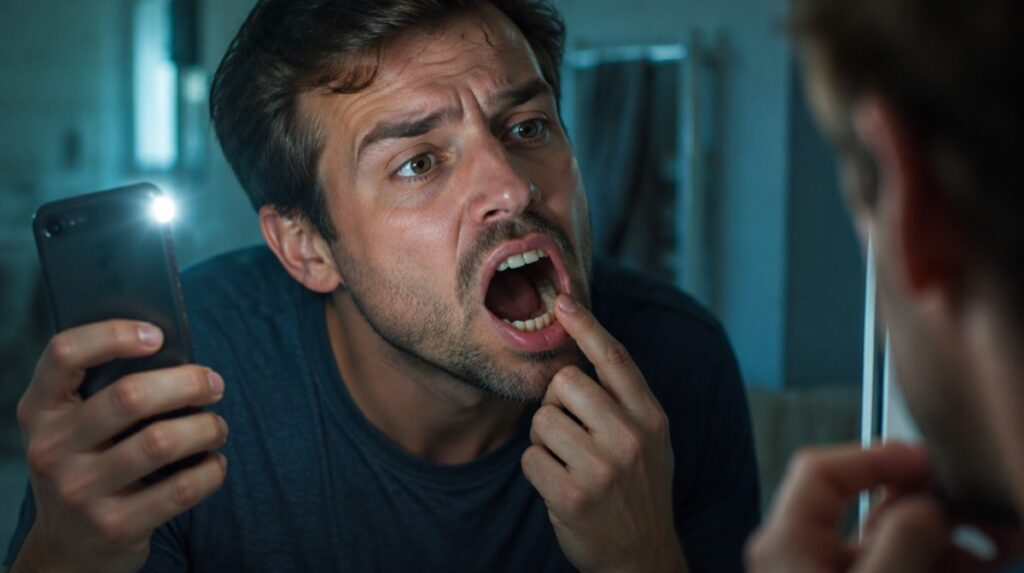

Spacers for teeth, also called orthodontic separators, are small rubber rings or metal springs placed between back teeth before braces. They push the teeth apart very slightly so the orthodontist can fit metal bands around the molars. They usually stay in for about a week. Most people feel pressure or soreness that peaks on the first day and eases after two or three days.
What are spacers for teeth?
Spacers are small devices that sit snugly in the contact point between two back teeth. Back teeth touch each other tightly, so there is no room to slide a metal band around a molar. Over several days, a spacer gently pushes the teeth apart, opening a gap about the thickness of the band.
A children’s hospital teaching sheet from Children’s Wisconsin describes a spacer simply as “a small rubber band that goes in between teeth,” used so the team can fit a band around a tooth for braces.
There are two common types:
| Elastomeric (rubber ring) spacers | Metal spring spacers | |
|---|---|---|
| What they look like | Small blue, gray or colored rubber donut | Small wire clip or spring |
| How they work | Ring is stretched and snapped through the contact; it tries to return to its shape and wedges teeth apart | Spring arms sit around the contact and press teeth apart |
| Space created | More, in one study | Less, in the same study |
| Pain | Similar to springs in studies | Similar to rubber rings in studies |
| Common issue | Can pop out with sticky food | Can loosen and slip |
A 2016 study in 30 patients placed one of each type in the same mouth. Rubber spacers opened more space, and pain scores were slightly higher with them at every time point, but the difference in pain was not statistically significant.
What do spacers do for teeth before braces?
Spacers are a preparation step. Many braces have metal bands around the first molars (and sometimes second molars) that anchor the wire or hold an appliance such as an expander. The band needs a sliver of space on both sides of the tooth to slide into place.
Not everyone gets spacers. If your orthodontist plans to glue brackets or tubes directly onto the back teeth instead of using bands, spacers may not be needed. Your orthodontist decides this based on your treatment plan. For an overview of the full process, see our guide to braces for adults.
How long do spacers stay in?
Spacers usually stay in for about a week before the bands go on, though your orthodontist sets the exact timing. In both studies cited below, spacers were tracked for seven days, and in one the remaining spacers were removed after day seven.
Once the bands are fitted, the spacers come out and are not replaced. If the bands go on and you no longer have a spacer between those teeth, the small gap is filled by the band itself.
Do spacers hurt?
Most people feel something. The common description is pressure, a dull ache, or a feeling that food is stuck between the teeth. Pain on biting and chewing is common.
The pattern in studies is consistent:
- First few hours: pressure starts to build, usually within about 4 hours.
- Day 1: soreness is usually at its worst. A study of 62 adolescents found pain was highest within the first day.
- Days 2 to 3: pain stays similar on day 2 and then drops noticeably by day 3.
- Days 4 to 7: most people have only occasional soreness, mainly when chewing.
In the 2016 study, the use of pain relievers was highest between 4 and 24 hours after placement. The Children’s Wisconsin sheet suggests over-the-counter pain medicine, soft cold foods and cold drinks for the first few days. Ask your orthodontist or pharmacist which pain reliever is suitable for you or your child.
Do spacers hurt more than braces?
Many people find spacers about as uncomfortable as the first few days of braces, and some find them worse because the pressure is concentrated on a few back teeth. Both follow the same pattern: soreness for a few days that then settles. For more on what the first weeks feel like, see our guide to braces for adults.
Spacers before and after: what to expect
On the day: the orthodontist stretches each spacer with floss or a small tool and snaps it between two back teeth. It takes a few minutes and usually needs no numbing. You’ll leave with spacers between some of your molars, often on both sides of the first molars.
During the week: your back teeth may feel loose or tender when you bite. This is normal tooth movement.
At the next visit: the spacers are removed and you may notice a small gap between the teeth. The bands are then fitted into those gaps. If a gap is left without a band, it usually starts to close on its own within a day or so.
How to care for spacers
The Children’s Wisconsin guide gives practical, plain advice:
- Brush normally. Spacers do not come out from brushing.
- Floss everywhere except between the spaced teeth. Floss there can pop the spacer out or push it deeper into the gum.
- Skip sticky foods. Gum, caramel and chewy candy can pull spacers out.
- Don’t pick at them with your tongue, fingers or a toothpick.
- Note how many you have and where they are. A quick phone photo helps.
Soft foods such as yogurt, pasta, eggs and smoothies make the first days easier. Our guide on what you can eat with braces has a longer list that works for spacers too.
What if a spacer falls out?
Call your orthodontist’s office. A spacer falling out late in the week can mean there is already enough space. One that falls out early may need to go back in, because the gap starts to close. The Children’s Wisconsin guide says a lost spacer should be replaced within 24 hours, and some offices send extra spacers home with instructions. Follow your own office’s advice rather than forcing a spacer back in.
How much do spacers cost?
Spacers are a routine step in braces treatment, so they are normally part of the overall fee rather than a separate charge. Traditional metal braces in the US commonly cost about $3,000 to $7,500 in total, depending on the case, the region and the type of braces. See our guide to how much braces cost for a full breakdown, including insurance and payment plans. If a spacer is lost and needs an extra visit, ask the office whether there is any charge.
When to see a dentist
Contact your orthodontist or dentist if pain is still severe after three or four days or is getting worse instead of better, if the gum around a spacer becomes swollen, very red, or starts to ooze, if you think a spacer has slipped under the gum and you can no longer see it, if a spacer falls out in the first few days, or if you have a fever or facial swelling. A spacer that slips below the gum line needs to be removed by the office.
Frequently asked questions
How long do spacers stay in your teeth?
Spacers usually stay in for about a week before the bands are fitted, though the orthodontist sets the timing. In published studies they were tracked for seven days. They are removed at the banding appointment and are not replaced once the bands are on.
How long do spacers hurt?
Soreness usually starts within a few hours, is strongest during the first 24 hours, and drops noticeably by day 3. A study of 62 adolescents found pain was highest on day 1 and fell significantly after the first two days. Occasional tenderness when chewing can last until the end of the week.
Can you eat normally with spacers?
Mostly, but chew carefully. Sticky foods such as gum, caramel and chewy candy can pull spacers out, so it is best to avoid them. Soft foods like pasta, eggs, yogurt and smoothies are easier on sore back teeth for the first few days.
Can you brush and floss with spacers?
Yes, you can brush normally. You can floss between your other teeth, but not between the teeth that have spacers. Floss in that spot can pop the spacer out or push it deeper into the gum.
What happens if a spacer falls out?
Call your orthodontist’s office. If it falls out near the end of the week, there may already be enough space. If it falls out early, it may need to go back in, because the gap begins to close within about a day. The office will tell you whether to come in or replace it at home.