
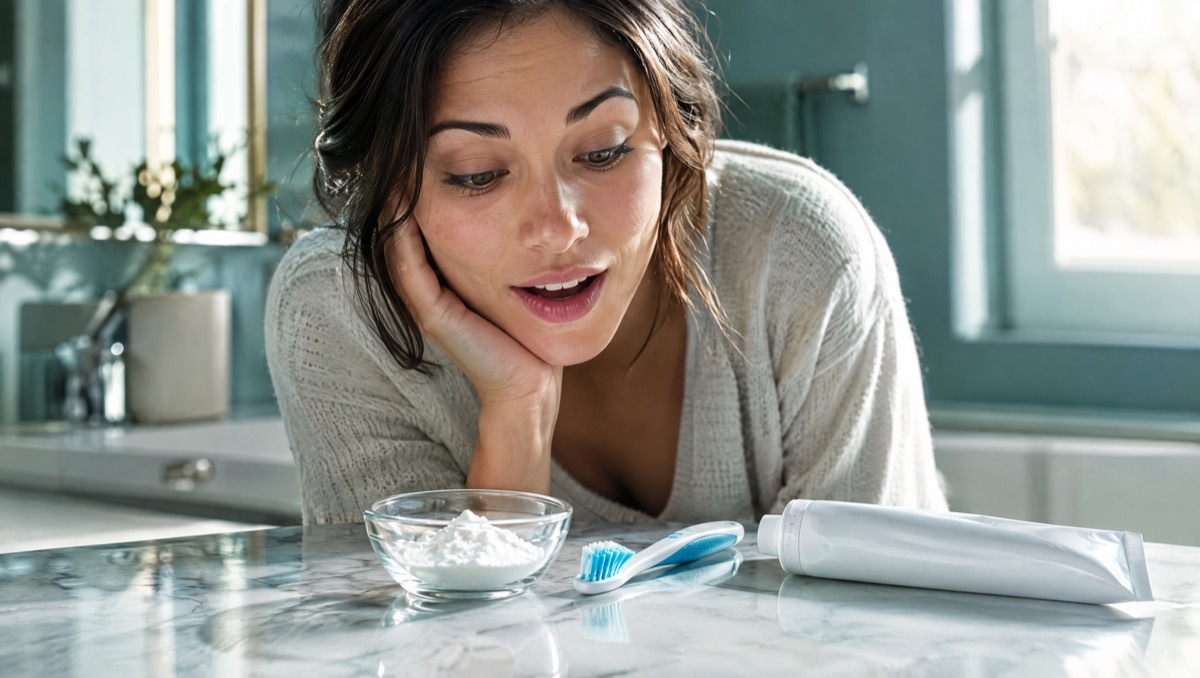
Baking soda is good for your teeth in toothpaste form. It is a mild abrasive that removes surface stains, and research shows baking soda toothpastes are safe and effective for stain removal. Plain baking soda is a different story: it has no fluoride, so it doesn’t protect against cavities and shouldn’t replace your regular toothpaste.
Quick verdict
- Best overall: a fluoride toothpaste that contains baking soda and carries the ADA Seal of Acceptance. You get the stain-lifting effect plus cavity protection.
- Best budget: a store-brand fluoride baking soda toothpaste. These are usually a few dollars a tube; check the label for fluoride and the ADA Seal.
- Who should skip plain baking soda: anyone at higher risk of cavities, anyone with sensitive teeth or worn enamel, and children, who need a fluoride toothpaste.
Baking soda options compared
| Option | Typical US price | Fluoride | Stain removal | Best for |
|---|---|---|---|---|
| Fluoride toothpaste with baking soda | About $3 to $8 a tube | Yes | Mild to moderate (surface stains) | Daily brushing |
| Whitening toothpaste (other abrasives, some with peroxide) | About $5 to $15 a tube | Usually | Surface stains; some lighten slightly | Coffee, tea and wine stains |
| Plain baking soda (from the kitchen) | Under $2 a box | No | Mild (surface stains) | Occasional use only, with fluoride toothpaste the rest of the time |
| Baking soda and hydrogen peroxide paste (DIY) | Under $5 | No | Uncertain; strength is uncontrolled | Not recommended |
Prices are typical US retail ranges and vary by brand, size and store.
What does baking soda do to your teeth?
Baking soda works in two ways. First, it is a mild abrasive. Its particles scrub away the film and surface stains left by coffee, tea, red wine and tobacco. Second, it is alkaline, so it can help neutralize acids in the mouth for a short time.
What it doesn’t do is change the color of the tooth itself. Teeth that are yellow or gray from the inside, because of age, genetics, medication or injury, need peroxide-based whitening to lighten. Our teeth whitening guide covers those options.
Is baking soda safe for teeth?
In toothpaste, yes. Abrasivity is measured on a scale called relative dentin abrasivity (RDA). The ADA says toothpastes at or below 250 RDA cause limited wear to dentin and virtually no wear to enamel with lifelong normal brushing, and every toothpaste with the ADA Seal must meet that limit. Baking soda is one of the softer abrasives used in toothpaste, and the 2017 JADA review describes it as having relatively low abrasivity.
The safety questions come from how people use plain baking soda at home:
- Scrubbing hard. Any abrasive plus heavy pressure can wear enamel and irritate gums. Brush gently with a soft-bristled brush.
- Mixing with acids. Lemon juice, vinegar and strawberry “whitening” pastes add acid to an abrasive. ADA MouthHealthy warns that fruit and vinegar contain acid that can wear down enamel. Worn enamel shows more of the yellow dentin underneath, so teeth can end up looking darker.
- Using it instead of toothpaste. Plain baking soda has no fluoride, and fluoride is what helps strengthen enamel and prevent cavities.
Does baking soda help with plaque and gum health?
Somewhat, but the effect is small. A 2019 systematic review in the International Journal of Dental Hygiene looked at 21 studies with about 2,500 people. In single-brushing studies, baking soda toothpaste removed a little more plaque than other toothpastes. In longer studies that benefit was only partly confirmed, and there was no significant difference in gum inflammation scores. The authors concluded that baking soda toothpaste is a reasonable alternative to other toothpastes, not a better one.
Plaque left on teeth hardens into tartar, which no toothpaste can remove. See plaque vs tartar for how they differ and what removes each.
Baking soda teeth before and after: what to expect
Expect modest results. Baking soda toothpaste can make teeth look brighter by lifting surface stains over a few weeks of regular brushing. It won’t make teeth several shades whiter the way peroxide strips, trays or in-office whitening can. Before-and-after photos online often reflect lighting, filters or professional whitening rather than baking soda alone.
If your teeth are sensitive, a toothpaste made for sensitivity may be a better fit. Our guide to tooth sensitivity explains the causes.
How to choose a baking soda toothpaste
Look for these on the label:
1. Fluoride listed as an active ingredient (sodium fluoride, sodium monofluorophosphate or stannous fluoride). 2. Sodium bicarbonate in the ingredients list. 3. The ADA Seal of Acceptance. The ADA reviews a company’s data on safety and effectiveness before granting the Seal. You can check a specific product in the ADA’s Seal product search.
Several major brands sell fluoride toothpastes with baking soda, and some are ADA-accepted. Because formulas change, check the current box rather than relying on a brand name alone. Pair it with good technique: two minutes, twice a day, as covered in how to brush your teeth.
If you want to use plain baking soda
Plain baking soda isn’t dangerous used gently and occasionally, but it adds little over a baking soda toothpaste and lacks fluoride. If you use it, keep it occasional, use a soft brush and light pressure, don’t add lemon juice or vinegar, and use a fluoride toothpaste for your regular brushing. Talk to your dentist first if you have sensitive teeth, gum recession, crowns, veneers or bonding.
When to see a dentist
See a dentist if you notice new sensitivity to hot, cold or sweet foods, teeth that look more yellow or translucent at the edges, gums that bleed or are pulling back, or dark spots that don’t brush away. Surface stains that keep coming back can also be removed at a routine cleaning. If you want teeth noticeably whiter, a dentist can tell you whether whitening will work on your type of discoloration.
Frequently asked questions
Is it OK to brush your teeth with baking soda every day?
Brushing every day with a fluoride toothpaste that contains baking soda is fine. Using plain baking soda instead of toothpaste every day isn’t a good idea, because it has no fluoride to help prevent cavities. If you use plain baking soda, keep it occasional and brush gently.
Does baking soda whiten teeth?
It removes surface stains, which can make teeth look brighter. A 2017 review in the Journal of the American Dental Association found baking soda toothpastes effective for stain removal and whitening. It doesn’t change the color of the tooth itself, so deeper discoloration needs peroxide-based whitening.
Can baking soda damage enamel?
Baking soda is a mild abrasive, and toothpastes with the ADA Seal are tested to stay within a safe abrasivity limit. Damage is more likely when plain baking soda is scrubbed hard or mixed with acids like lemon juice or vinegar, which soften and wear enamel.
Is baking soda good for gums?
The evidence is limited. A 2019 systematic review found a small improvement in gum bleeding compared with a toothpaste with no active ingredient, but no significant difference in gum inflammation scores. Baking soda toothpaste is a reasonable choice, but it doesn’t treat gum disease.
Can I mix baking soda with hydrogen peroxide?
Some people do, but the strength of a homemade paste is uncontrolled and can irritate gums or make teeth sensitive. ADA MouthHealthy suggests talking to your dentist before trying home whitening methods. Over-the-counter whitening products with the ADA Seal are a more predictable option.