
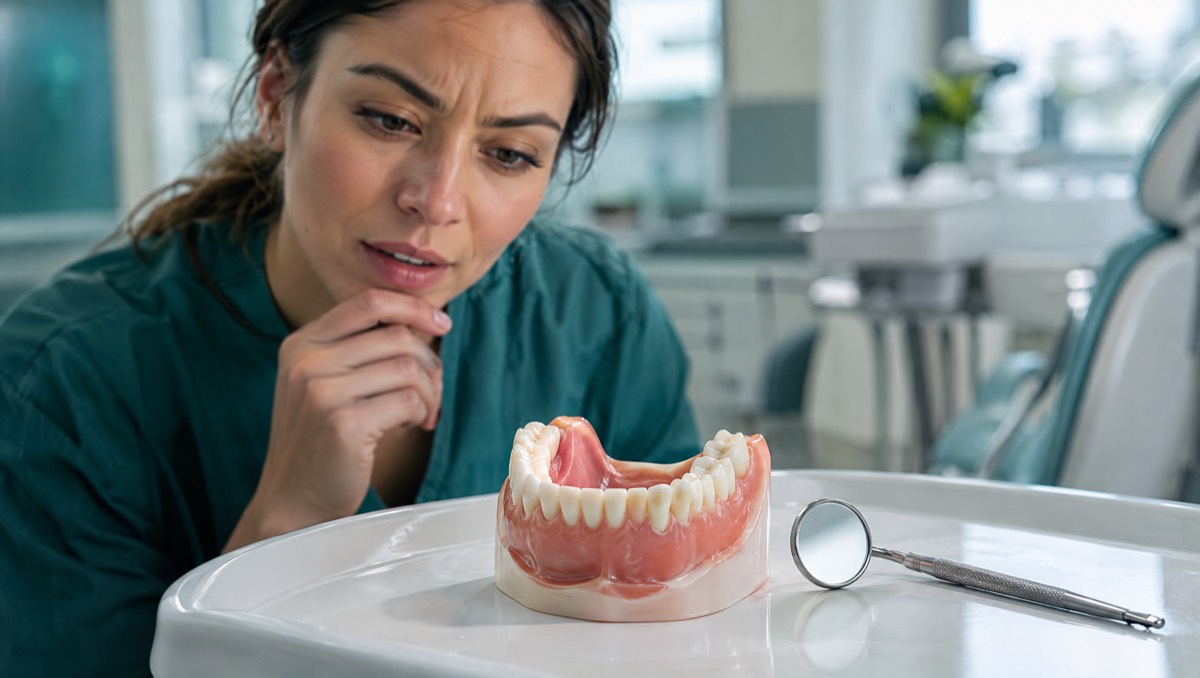
When a tooth can be saved, a root canal is usually the better choice. Root-canal-treated teeth survive at high rates for years, and keeping your own tooth avoids the cost of replacing it. Extraction costs less on the day, but an implant or bridge to fill the gap usually costs more than the root canal and crown would have.
Quick verdict
- Choose a root canal if the tooth can be restored: enough healthy structure is left for a crown and the gum and bone around it are healthy.
- Choose extraction if the tooth is cracked below the gumline, has very little structure left, is loose from advanced gum disease, or is a wisdom tooth.
- Cost difference: a molar root canal plus crown typically runs $2,000 to $4,300. Extraction plus an implant typically runs $3,150 to $6,900 or more.
- The catch: a root canal is not a guarantee. Some teeth need retreatment later, and a tooth that fails can still be pulled and replaced.
Root canal vs extraction at a glance
| Factor | Root canal (plus crown) | Extraction (plus replacement) |
|---|---|---|
| What happens | Infected pulp removed, canals cleaned and sealed, tooth kept | Whole tooth removed; gap left or filled |
| Typical US cost | $700 to $1,800 for the root canal, plus $1,000 to $2,500 for a crown | $150 to $400 simple, $250 to $700+ surgical; implant adds $3,000 to $6,500 |
| Visits | 1 to 2 for the root canal, 2 more for the crown | 1 for the extraction; an implant takes months |
| Pain during | Local anesthetic; usually similar to a filling | Local anesthetic; pressure, not sharp pain |
| Recovery | Most people feel normal within a week | Routine activities in 2 to 3 days; the bone takes weeks to heal |
| Long-term result | 86% to 93% of teeth still present 2 to 10 years later | Depends on the replacement chosen |
| Keeps your natural tooth | Yes | No |
Costs are typical US ranges before insurance, matching the ranges in our root canal, tooth extraction and dental implant guides. Your price depends on the tooth, your region, and whether a specialist does the work.
Cost: cheaper today vs cheaper over time
On the day of treatment, extraction is almost always the cheaper option. A simple extraction usually costs $150 to $400. A root canal costs $700 to $1,800 depending on the tooth, and most back teeth then need a crown at $1,000 to $2,500.
The comparison changes once you count what comes after. A missing back tooth is usually replaced with an implant ($3,000 to $6,500 all-in), a dental bridge ($2,000 to $5,000), or a partial denture. The American Association of Endodontists notes that the cost of extraction plus a replacement is often higher than the cost of saving the tooth.
Insurance matters too. Many plans cover root canals and extractions as basic or major services, while implants are often covered at a lower rate and quickly hit the annual maximum. Check your plan before deciding.
Pain: does a root canal hurt more than an extraction?
Both are done with local anesthetic, so neither should be sharply painful while it happens. Cleveland Clinic says that with modern anesthesia a root canal is usually no more painful than getting a filling. You will feel pressure during both procedures.
Afterward, mild soreness for a few days is common with a root canal. Extraction soreness depends on how hard the tooth was to remove; a surgical extraction usually means more swelling. A lot of the pain people link to root canals is the toothache that came before it, which the treatment relieves.
Recovery time
After a root canal, Cleveland Clinic says most people recover in less than a week. You will need to avoid chewing hard on the tooth until the permanent crown is placed.
After an extraction, most people return to routine activities within 48 to 72 hours, according to Cleveland Clinic, but the jawbone takes several weeks to heal, and up to four months for a molar. You will need to protect the blood clot in the socket to avoid dry socket, which means no straws and no smoking for a while. If you plan an implant, it usually waits until the socket has healed.
Long-term results
Root canal. A 2010 systematic review in the International Endodontic Journal pooled studies of tooth survival after root canal treatment. Between 86% and 93% of teeth were still present 2 to 10 years later. Four things were linked to better survival: a crown placed after treatment, having teeth on both sides, the tooth not being used to anchor a bridge or denture, and it not being a molar.
Extraction. The result depends on what replaces the tooth. A 2007 systematic review in the Journal of Prosthetic Dentistry found that root canal treatment and single implants both had high long-term survival, better than fixed bridges. It recommended giving priority to keeping the tooth with a root canal or replacing it with a single implant. Leaving the gap empty was linked to worse outcomes for people’s comfort and confidence, though that evidence was limited.
When extraction is the better option
A root canal only works if the tooth can be rebuilt afterward. Dentists usually suggest extraction when:
- The tooth is cracked vertically or broken below the gumline.
- Decay has destroyed so much of the tooth that a crown has nothing to hold on to.
- The tooth is loose because advanced gum disease has destroyed the bone around it.
- It is a wisdom tooth or another tooth you don’t need to replace.
- A previous root canal has failed and retreatment is unlikely to work.
Cost can also be a real factor. If a root canal and crown are out of reach and you don’t plan to replace the tooth, extraction removes the infection. Ask your dentist what leaving the gap could mean for the teeth around it.
Root canal vs implant: the real comparison
For most people the choice isn’t root canal vs extraction alone, but saving the tooth vs pulling it and getting an implant. The American Association of Endodontists recommends saving your natural tooth when it can be restored, and suggests an implant when a tooth is too damaged to save or already lost. Both have high success rates. A root canal is faster and usually cheaper. An implant avoids future problems with that tooth but needs surgery and months of healing.
One more point: you can go from a root canal to an implant later if the tooth fails, but you can’t go back once a tooth is pulled.
When to see a dentist
See a dentist promptly if you have a toothache that wakes you up or lasts more than a day or two, pain when biting, a tooth that is sensitive to heat long after the hot drink is gone, a pimple-like bump on the gum, or a tooth that has darkened. Get urgent care for facial swelling, fever, or trouble swallowing or breathing, which can mean a spreading tooth abscess. If your dentist suggests extraction, it is reasonable to ask whether an endodontist could save the tooth first.
Frequently asked questions
Is it better to get a root canal or an extraction?
When the tooth can be restored, a root canal is usually better. You keep your natural tooth, and 86% to 93% of treated teeth were still present 2 to 10 years later in a large review. Extraction is the better choice when the tooth is too damaged or loose to rebuild, or when it is a tooth you don’t need, such as a wisdom tooth.
Does a root canal hurt more than an extraction?
Neither should be sharply painful during treatment because both use local anesthetic. Cleveland Clinic says a root canal is usually no more painful than a filling. Soreness afterward is usually mild for a root canal and can be greater after a surgical extraction, but it varies from person to person and tooth to tooth.
Is a root canal cheaper than an extraction?
Not on the day: a simple extraction is about $150 to $400, while a root canal is $700 to $1,800 plus a crown. Over time it often is cheaper, because replacing a pulled tooth with an implant typically costs $3,000 to $6,500 and a bridge $2,000 to $5,000.
Can I just get the tooth pulled and not replace it?
Sometimes, especially for wisdom teeth or some back teeth. For other teeth, a gap can affect chewing, appearance and the teeth around it. Your dentist can explain what leaving a specific gap may mean for you before you decide.
Can a tooth be extracted after a root canal?
Yes. If a root-canal-treated tooth fails or breaks later, it can still be retreated or removed and replaced with an implant or bridge. That is one reason many dentists suggest trying to save the tooth first, since an extraction can’t be undone.