Rubber bands for braces, called elastics, are small latex or latex-free loops that hook between brackets on the upper and lower teeth to pull the jaws into a better bite. Brackets and wires straighten teeth within each arch; elastics are what correct how the top and bottom teeth meet. They only work while they are in, which means 20 to 22 hours a day, changed several times daily. Skipping them is the most common reason orthodontic treatment runs months over schedule.
What elastics actually do
Braces move teeth within a single arch, upper or lower. They cannot, on their own, change how the upper arch sits relative to the lower one. That is the job of elastics. Hooked between an upper bracket and a lower bracket, they pull with a light, constant force that gradually shifts one jaw’s teeth forward or back relative to the other, or corrects a sideways crossbite.
Because the force needs to be light and continuous, elastics are made of a stretchy material that loses tension after a few hours. That is why they are changed several times a day rather than once.
The main types
Elastics are described by two things: how they are hooked, and how strong they are.
Class II elastics run from an upper front (canine) bracket to a lower back (molar) bracket. They pull the upper teeth back and the lower teeth forward, correcting an overbite. The most common configuration.
Class III elastics run the opposite way, from a lower front bracket to an upper back bracket, to correct an underbite.
Vertical elastics connect an upper and lower bracket directly above and below each other, closing an open bite or settling teeth together at the end of treatment.
Cross elastics run from the outside of an upper tooth to the inside of a lower tooth (or vice versa) to correct a crossbite.
Triangle and box configurations hook three or four brackets to work on several movements at once.
Force is measured in ounces (typically 2 to 8 oz) and diameter in fractions of an inch (typically 3/16″ to 5/16″). Your orthodontist chooses the size; the bag will be labelled. Do not swap sizes yourself.
How to wear them
Hours. 20 to 22 hours a day, including overnight. Your orthodontist will tell you if a lighter schedule applies, for instance nights only near the end of treatment. Otherwise assume full time.
Changing. Every time you eat and at least three to four times a day, fresh band, even if the old one looks fine. Elastics lose most of their pulling force within a few hours.
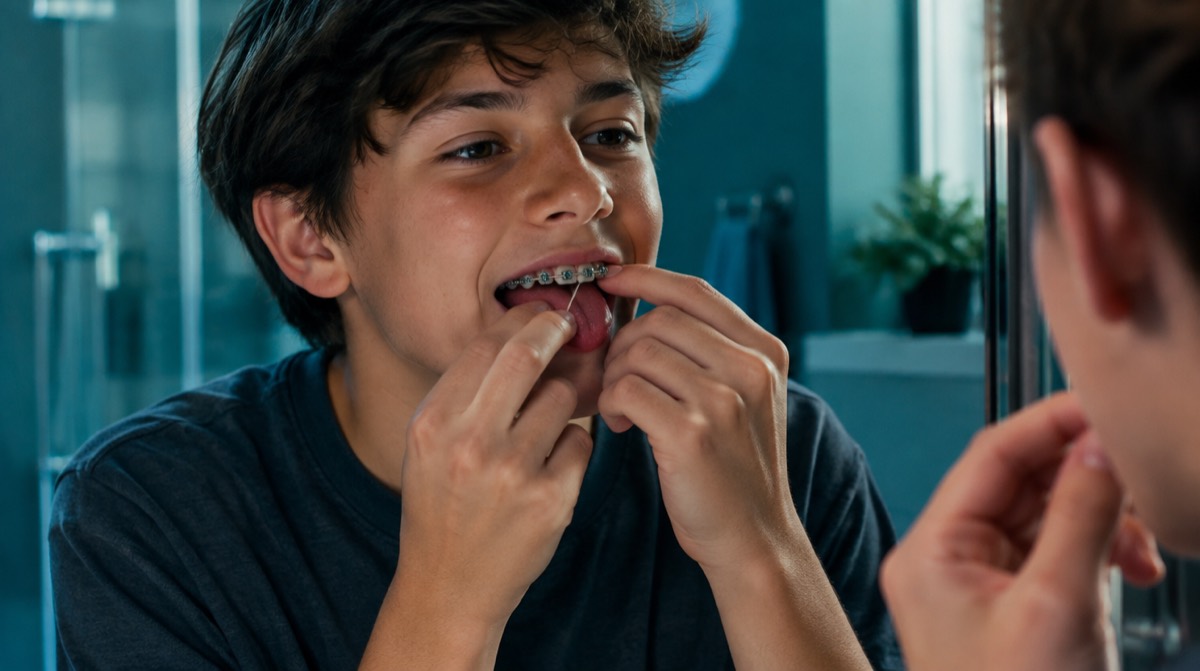
Putting them on. Most people manage with fingers within a few days; a small plastic hook tool comes with the elastics for hard-to-reach molar hooks. Use a mirror until it is automatic. If a band breaks or pings off, replace it immediately.
Eating. Take them out. Chewing with elastics in stretches and snaps them and makes eating awkward. Put fresh ones in straight after.
Brushing. Out for brushing, back in afterward.
Carry spares. In your pocket, bag, car, and desk. Running out for a weekend is a week of lost progress.
What it feels like
The first two to four days are the worst: jaw tenderness, tired-feeling teeth, and a dull ache that over-the-counter pain relief handles. The discomfort means the elastics are working. It fades as the teeth begin to move. Each time your orthodontist changes the configuration or steps up the strength, expect a milder version of the same few days.
Persistent sharp pain, a tooth that feels very loose, or a bracket that pulls away are not normal; call the orthodontist.
Why skipping them matters so much
Teeth move in response to continuous force. Wear elastics 22 hours and the bite corrects in months. Wear them 12 hours and the teeth spend half the day drifting back; the net movement can be close to zero. Orthodontists can tell within a visit or two from how the bite looks, and the usual result is added months of treatment, sometimes a switch to a less comfortable fixed appliance that does the same job without relying on you. Our guide to the cost of braces explains what a standard case fee covers.
Doubling up to compensate is a bad idea. Two bands, or a heavier band than prescribed, apply more force than the bone can remodel to, which risks damaging the tooth roots and does not move teeth faster. If you have missed a stretch, just resume the prescribed wear and tell your orthodontist.
Common problems and fixes
The band keeps snapping. Usually it is being stretched over too many teeth or hooked on a bracket wing rather than the hook. Check the diagram your orthodontist gave you; if in doubt, take a photo of your teeth and message the office.
The hook is hard to reach. Use the plastic placement tool from the bag, and practise in front of a mirror for a day or two. Most people are attaching bands without looking within a week.
A bracket or hook has come off. You cannot wear the elastic on that side until it is repaired. Call the office; leaving one side unhooked for more than a few days can shift the bite unevenly.
You keep forgetting. Tie the routine to something fixed: bands go in after every meal and after brushing at night. A phone reminder for the first two weeks builds the habit. Keep spare bags everywhere you spend time.
Your jaw aches. Normal for the first few days after starting or changing bands. Soft food, over-the-counter pain relief, and a cold compress help. If it persists past a week or you notice clicking, tell the orthodontist.
Latex allergy
Standard elastics are latex. If you have a latex allergy or notice itching, redness, or swelling of the lips or gums, tell your orthodontist; latex-free elastics are available and work identically.
When to see a dentist
Contact your orthodontist if elastics cause sharp or increasing pain after the first week, if a bracket or hook comes loose so you cannot attach them, if you have a reaction suggesting latex allergy, if you have run out of the correct size, or if you have been unable to wear them for more than a few days for any reason. Keep regular appointments even if you think you have not been wearing the bands enough; it is far better for the orthodontist to know than to guess.
Frequently asked questions
How many hours a day should I wear my rubber bands?
20 to 22 hours, including while sleeping, unless your orthodontist has specifically told you otherwise. Out only for eating and brushing.
How often should I change them?
At least three to four times a day, and every time you eat. Elastics lose their pulling force within a few hours even if they look intact.
Do rubber bands speed up braces?
They do the bite correction that brackets cannot, so wearing them as prescribed keeps treatment on schedule. Wearing more than prescribed does not speed anything up and can damage roots.
Can I sleep with rubber bands in?
Yes, and you should. Overnight is a third of your wear time. Put fresh ones in before bed.
What if I forget them for a day?
Just put them back in and continue. Do not double up. If you have missed several days, mention it at your next visit so the orthodontist can adjust the plan.