Bruxism is involuntary clenching or grinding of the teeth. Sleep bruxism happens during sleep and is classified as a sleep-related movement disorder; awake bruxism is usually a daytime clenching habit tied to stress or concentration. Night-time grinding generates forces several times greater than normal chewing, and because it continues for minutes at a time it wears enamel flat, cracks teeth and fillings, and leaves the jaw muscles aching. Roughly 8 to 10 percent of adults grind in their sleep. There is no cure, but the damage is preventable: a custom night guard protects the teeth, and addressing stress, sleep quality, and sleep apnoea reduces the grinding itself.
How to tell if you grind
Since it happens in your sleep, the evidence is indirect:
- Jaw soreness or tightness on waking, easing through the morning
- Dull headache around the temples, worst first thing
- Teeth that are sensitive to cold, or that ache generally
- Flattened, shiny wear facets on the biting surfaces, especially the canines
- Chipped enamel, cracked fillings, or repeatedly failing crowns
- Notches at the gum line (abfraction lesions) from flexing under load
- A ridge of thickened tissue along the inside of the cheek, or scalloped indentations along the edge of the tongue
- Clicking or locking of the jaw joint
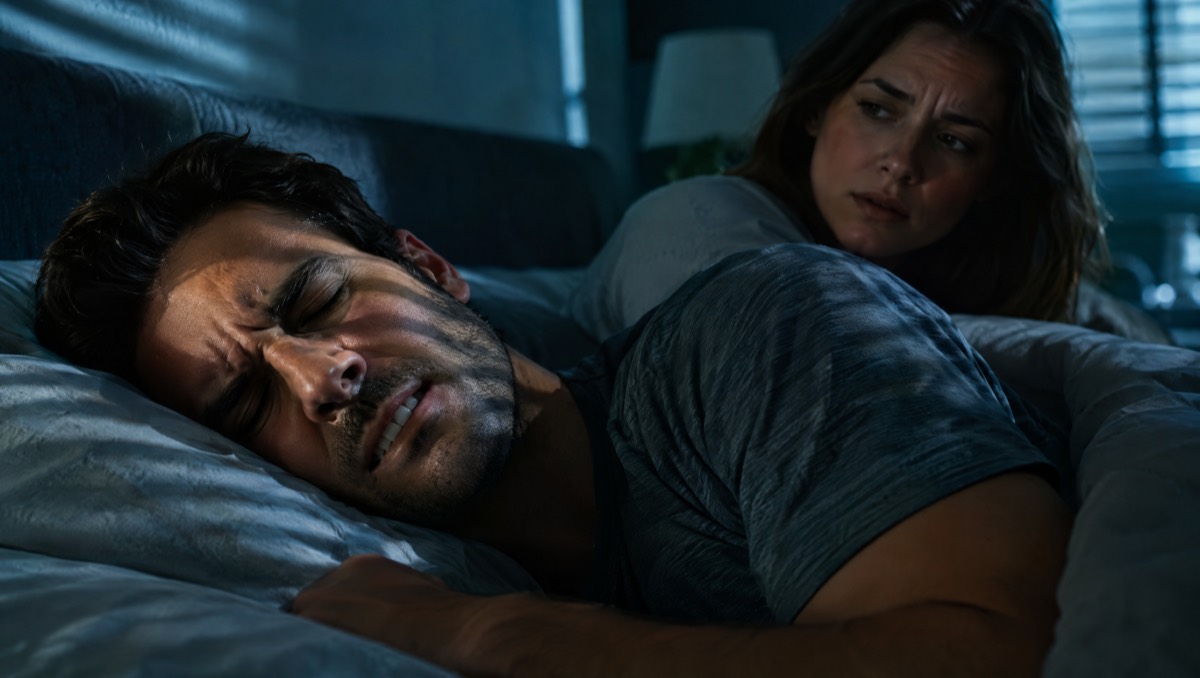
- A partner who hears it. Grinding can be loud enough to wake someone else.
Dentists usually spot it before patients do, because enamel wear follows a recognisable pattern.
What causes it
The honest answer is that it is multifactorial and not fully understood, but the main associations are clear:
Sleep arousals and sleep apnoea. Sleep bruxism clusters around brief arousals from sleep. In obstructive sleep apnoea, grinding episodes often follow breathing events, and there is a plausible protective mechanism: jaw movement helps reopen the airway. This association is important, because treating the apnoea often reduces the grinding, and a night guard alone in an untreated apnoea patient addresses only the symptom.
Stress and anxiety. Well established for awake clenching, and a contributor to sleep bruxism.
Medications and substances. SSRIs and SNRIs are the best-documented drug trigger. Also amphetamines and some antipsychotics. Alcohol, caffeine, nicotine, and recreational stimulants all increase it.
Reflux (GERD). Acid in the oesophagus at night is associated with more grinding episodes.
Age. Common in children, where it usually resolves without treatment, and declines with age in adults.
Bite problems. Historically blamed, now considered a minor factor at most. Adjusting a healthy bite to treat bruxism is not supported by evidence and risks irreversible damage to the teeth.
The damage it does
Tooth wear. Enamel grinds flat, exposing softer yellow dentin underneath, which wears several times faster. Teeth look shorter and darker over time. Advanced wear can require full-mouth rehabilitation with crowns, a $30,000 to $80,000 undertaking.
Cracks and fractures. Cracked cusps, fractured fillings, failed crowns, and in severe cases teeth split below the gum line and need extraction.
Sensitivity. Both from exposed dentin and from flexing at the gum line. Our guide to tooth sensitivity covers management.
Jaw joint and muscle pain. Overworked masseter and temporalis muscles ache and can develop trigger points; the joint itself may become painful or start clicking. See TMJ disorder.
Headaches. Typically tension-type, around the temples, worst in the morning.
Implant and restoration failure. Grinding forces are a recognised risk factor for failure of dental implants and for repeated breakage of veneers and crowns.
Treatment: protection versus reduction
These are two different goals and it is worth being clear which a given treatment achieves.
Protecting the teeth
| Option | Cost (US) | Notes |
|---|---|---|
| Custom hard acrylic night guard | $300 – $800 | Made from impressions, precise fit, lasts 3–10 years. The standard of care. |
| Custom soft guard | $200 – $500 | More comfortable, wears faster, and in some people encourages chewing on it |
| Boil-and-bite (pharmacy) | $20 – $60 | Bulky, imprecise, lasts months. Reasonable as a stopgap while arranging a custom guard |
| Mail-order custom guard | $100 – $200 | Made from a home impression; fit is variable and no clinician checks your bite |
A guard does not stop grinding. It redistributes the force and gives the enamel something expendable to wear instead. That is a genuine win, but it is damage control.
Reducing the grinding itself
- Treat sleep apnoea if present. CPAP or a mandibular advancement device often reduces bruxism substantially. If you snore loudly, wake unrefreshed, or have been told you stop breathing, ask for a sleep study.
- Stress management. Regular exercise, sleep hygiene, and CBT have evidence for awake clenching in particular. Biofeedback shows promise for sleep bruxism but the evidence is still thin.
- Medication review. If grinding began after starting an SSRI, discuss it with the prescriber; sometimes a dose change or a switch helps. Never stop an antidepressant on your own.
- Daytime awareness. For awake clenching, the practical trick is a frequent check: lips together, teeth apart. Teeth should only touch when swallowing or chewing. Phone reminders or sticky notes work until the habit shifts.
- Cut evening caffeine, alcohol, and nicotine. All increase sleep arousals.
- Botulinum toxin into the masseter reduces muscle force and is used in severe cases. It reduces damage and pain but does not treat the underlying cause, needs repeating every three to six months, and costs $600 to $1,500 per session.
When to see a dentist
Book an appointment if you wake with jaw soreness or temple headaches most mornings; if a partner hears you grinding; if teeth look shorter, flatter, or have chipped; if a filling or crown has broken more than once; if teeth have become sensitive without an obvious cause; or if you notice notches at the gum line. See a dentist promptly if the jaw locks open or closed, if the joint is painful to touch, or if you cannot open your mouth fully. Speak to a physician as well, rather than only a dentist, if you snore loudly, wake unrefreshed, or someone has seen you stop breathing in your sleep, since untreated sleep apnoea is both a cause of grinding and a serious condition in its own right.
Frequently asked questions
How do I know if I grind my teeth at night?
The usual clues are morning jaw soreness, headaches at the temples, tooth sensitivity, and flattened or chipped teeth. A partner may hear it. A dentist can confirm it from the wear pattern on your enamel.
Does a night guard stop teeth grinding?
No. It protects teeth from the damage but does not reduce the grinding. Reducing the grinding means addressing sleep apnoea, stress, medications, or other triggers.
Are mouth guards from the pharmacy good enough?
As a temporary measure while you arrange a custom guard, yes. Long term, boil-and-bite guards fit poorly, wear through within months, and can alter your bite if used for a long time without supervision.
Can stress alone cause teeth grinding?
Stress is clearly linked to daytime clenching and contributes to night grinding, but sleep bruxism is usually multifactorial, with sleep arousals and apnoea playing a major role. Managing stress helps; it is rarely the whole answer.
Will grinding damage dental implants or veneers?
Yes. Bruxism is a recognised risk factor for implant failure and for fractured veneers and crowns. Tell your dentist before any restorative work, so the plan accounts for it and a guard is made.