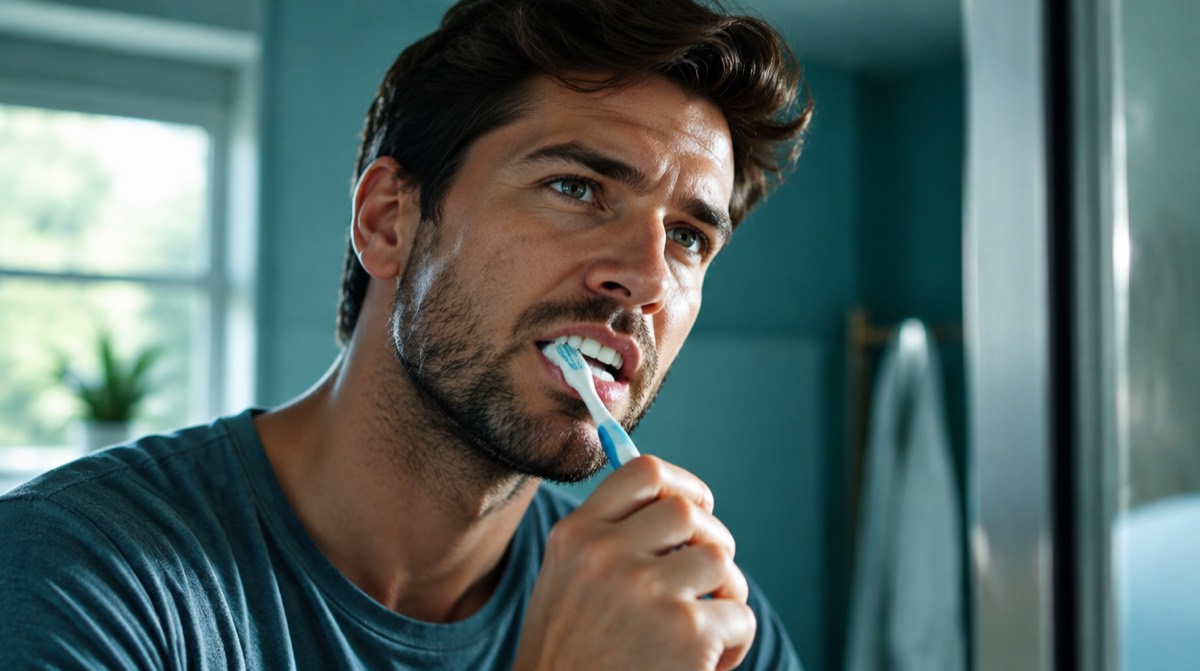
Brush twice a day for two minutes with a soft-bristled brush and fluoride toothpaste, holding the brush at a 45-degree angle to the gum line and moving it in short, gentle strokes across every surface of every tooth. Spit but do not rinse afterward, so the fluoride stays on your teeth. Most adults brush daily and still get cavities and gum disease because they brush too briefly, too hard, or miss the same spots every time.
The technique, step by step
1. Start in a different place each time. Most people always begin in the same spot and always run out of attention in the same spot. Rotate your starting point so no area is permanently short-changed.
2. Angle the bristles at 45 degrees toward the gum line. The bacteria that cause gum disease live in the shallow groove where tooth meets gum. A flat brush skates over it. Tilting the bristles into that groove is the single change that matters most.
3. Use short strokes, tooth by tooth. Small back-and-forth or circular motions about the width of one tooth. Long sawing strokes across the whole arch miss the curves between teeth. If you use an electric brush, do not scrub at all: hold it still on each tooth for a couple of seconds and let the head do the moving.
4. Cover all five surfaces. Outside (cheek side), inside (tongue side), and chewing surface of every tooth, upper and lower. The inside of the lower front teeth and the outside of the upper back molars are the two most commonly missed areas. For the inside of the front teeth, turn the brush vertical and use the tip.
5. Two minutes. Roughly 30 seconds per quadrant. Almost everyone who guesses is under a minute. Use a timer, a two-minute song, or the built-in timer on an electric brush.
6. Brush your tongue, or scrape it. A large share of bad-breath bacteria lives on the back of the tongue. A few gentle strokes or a tongue scraper takes care of it.
7. Spit, do not rinse. Rinsing with water or mouthwash right after brushing washes away the concentrated fluoride that was just applied. Spit out the excess and leave the rest. If you want to use mouthwash, use it at a different time of day.
When to brush
Twice a day is the minimum, and one of those times should be last thing before bed. Saliva flow drops during sleep, so anything left on your teeth overnight does maximum damage. Morning brushing can be before or after breakfast; the evidence is mixed and either is fine.
Wait after acid. Citrus, soda, wine, sports drinks, and vomiting all soften the enamel surface for a short time. Brushing immediately afterward scrubs that softened layer away. Rinse with water, wait 30 to 60 minutes, then brush.
After sugar, sooner is better as long as it was not also acidic. If you cannot brush, rinsing with water or chewing sugar-free gum helps.
Manual or electric?
Reviews of clinical trials find that electric brushes, particularly oscillating-rotating heads, remove modestly more plaque and reduce gingivitis slightly more than manual brushes over several months. The gap is real but small, and a manual brush used well beats an electric brush used badly.
Where electric brushes genuinely help is behaviour: the built-in two-minute timer fixes the most common mistake, and a pressure sensor stops you scrubbing. If you brush too briefly or too hard, and most people do, an electric brush is worth it. A capable model costs $25 to $50; premium models add features, not cleaning power. See our electric toothbrush guide for what matters when choosing one.
Whichever you use, soft bristles only. Medium and hard bristles are sold, and dentists spend a lot of time repairing the gum recession and notched enamel they cause. Replace the brush or head every three months, or sooner when the bristles splay. Our guide to cleaning your toothbrush covers care between replacements.
Which toothpaste
Any toothpaste with fluoride and the ADA Seal of Acceptance does the job. Fluoride is the ingredient that matters: it rebuilds weakened enamel and makes it more resistant to acid. Adult toothpaste in the US contains 1,000 to 1,500 ppm fluoride; higher-strength prescription paste (5,000 ppm) exists for people at high cavity risk.
Beyond fluoride, the differences are mostly marketing. Whitening toothpastes remove surface stains with mild abrasives and cannot change the underlying colour of teeth. Sensitivity toothpastes containing potassium nitrate or stannous fluoride do work for many people, over a few weeks of use. Charcoal toothpastes are abrasive and often fluoride-free; there is no good evidence they whiten and some evidence they damage enamel.
Use a pea-sized amount. More produces more foam, not more cleaning.
The mistakes dentists see most
- Brushing too hard. The most common one. Receding gums, notches at the gum line, and sensitivity are the result. If your bristles splay within a few weeks, you are pressing too hard.
- Brushing too briefly. Under a minute leaves the back teeth and gum line essentially untouched.
- Missing the gum line. Holding the brush flat against the tooth surface cleans the part of the tooth that was never at risk.
- Skipping the inside surfaces. Especially the lower front teeth, where tartar builds fastest.
- Rinsing immediately. Undoes most of the benefit of fluoride toothpaste.
- Using an old brush. Worn bristles clean poorly and harbour bacteria.
- Brushing right after acid. Erodes enamel that would have rehardened on its own.
- Thinking brushing is enough. A brush cannot reach between teeth. Flossing or a water flosser once a day is the other half of the job.
When to see a dentist
Gums that bleed every time you brush, persistent bad breath despite good brushing, teeth that have become sensitive to cold, gums that look like they are pulling away from the teeth, or pain when brushing a specific tooth are all reasons to book a visit. Bleeding gums in particular are the earliest sign of gum disease and are fully reversible at that stage. Everyone should have a professional cleaning and check-up at least once a year, and twice a year if you have had cavities or gum problems.
Frequently asked questions
Should I brush before or after breakfast?
Either is acceptable. Brushing before removes overnight plaque before it meets sugar; brushing after removes food. The only firm rule is to wait 30 to 60 minutes after anything acidic, including orange juice.
Is it bad to brush three times a day?
No, as long as you use a soft brush and gentle pressure. More than three times, or brushing immediately after every meal, raises the risk of enamel wear without adding benefit.
How do I know if I’m brushing too hard?
Your toothbrush bristles fan out within a month, your gums are receding or sore after brushing, or you can see small notches on teeth at the gum line. Switch to a soft brush and use the pressure you would use to hold a pen.
Do I need mouthwash?
No. Brushing and cleaning between teeth do the work. A fluoride mouthwash at a different time of day can add protection for people at high cavity risk, and an antibacterial rinse can help with gum inflammation, but neither replaces brushing.
How long should a toothbrush last?
About three months. Replace it sooner if the bristles are splayed or after you have been ill.