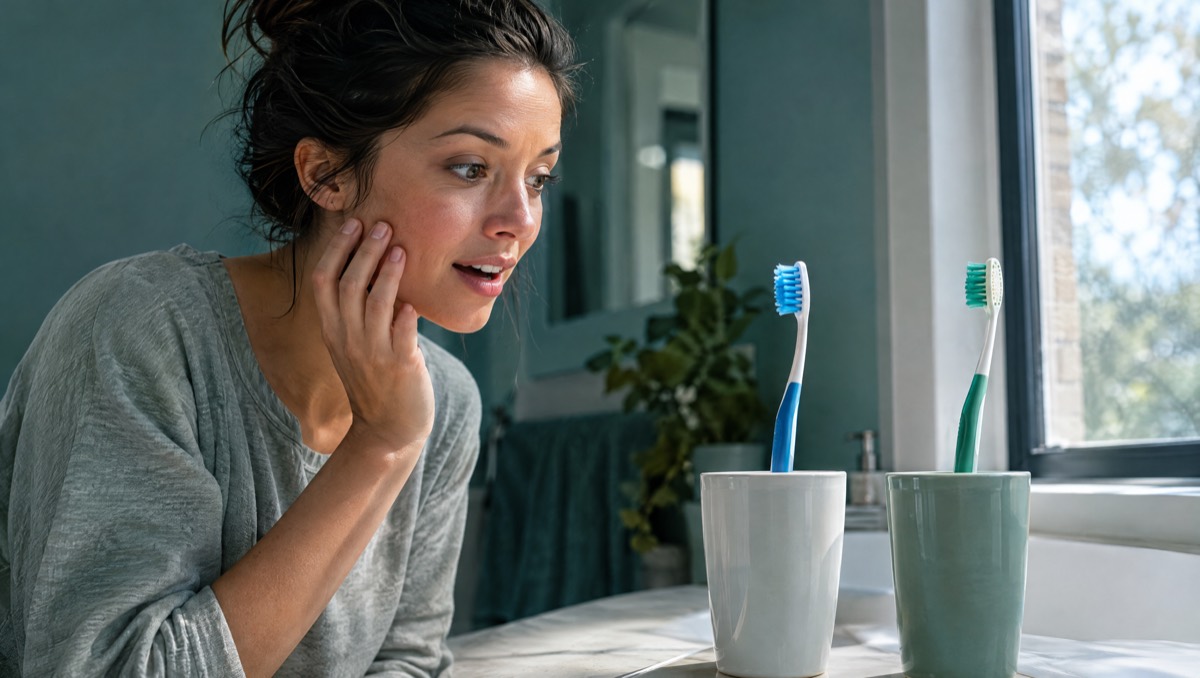
For most healthy people, the way to disinfect a toothbrush is simpler than it sounds: rinse it well under tap water after every use, shake off the water, and stand it upright to air dry, away from other brushes. If you want to go further, a short soak in an antibacterial mouthwash or 3% hydrogen peroxide reduces bacteria. Replace it every three to four months.
Quick verdict
- Best everyday method: rinse under running tap water, tap off the excess, and air dry upright in an open holder. It costs nothing and is what the ADA recommends.
- Best budget disinfecting option: a short soak in an antibacterial mouthwash or 3% hydrogen peroxide, using fresh liquid each time.
- Worth buying a UV sanitizer? Only if it gives you peace of mind. If you buy one, the ADA advises choosing a device cleared by the US Food and Drug Administration (FDA). No home device sterilizes a brush.
- Skip: microwaving, dishwashers, boiling, bleach and household disinfectants.
Do you actually need to disinfect a toothbrush?
Studies find bacteria on almost every used toothbrush, some from your own mouth and some from the bathroom air and surfaces. That sounds alarming, but the ADA notes that there is no evidence these bacteria cause adverse health effects, and there is little research on whether sanitizing changes anything for a healthy person.
So routine disinfection is optional. What clearly matters is keeping the brush clean and dry between uses, not sharing it, and replacing it on time. People with a weakened immune system, or anyone told by their doctor to take extra precautions, have more reason to sanitize.
How to clean your toothbrush after every use
This is the routine the ADA and MouthHealthy recommend for everyone:
1. Rinse thoroughly under running tap water to remove leftover toothpaste and food debris. Rub your thumb across the bristles to loosen anything stuck at the base. 2. Tap off the excess water against the edge of the sink. 3. Store it upright in an open holder so it can air dry. 4. Keep brushes apart. If several people share a cup or holder, make sure the heads don’t touch. 5. Don’t routinely cover it. A moist brush in a closed cap or container grows more microbes than one left in open air. Travel caps are fine for a trip, as long as the brush dries out when you arrive.
For electric toothbrushes, do the same with the brush head, and pop the head off the handle every week or so to rinse away the toothpaste that collects at the connection.
How to disinfect a toothbrush: methods compared
If you want to go beyond rinsing, here is how the common methods stack up.
| Method | How it’s done | Evidence | Typical US cost |
|---|---|---|---|
| Rinse and air dry | Tap water, then upright in open air | ADA’s standard advice | Free |
| Antibacterial mouthwash soak | Bristles in a small cup of mouthwash (studies used up to 20 minutes), then rinse | Reduced bacteria by about 85% in a study cited by the ADA | A few cents per soak |
| 3% hydrogen peroxide soak | Bristles in a small cup of drugstore 3% peroxide, then rinse well | Same study: about 85% reduction | About $1 to $3 a bottle |
| UV sanitizer | Brush head sits in a small UV chamber | Lab studies show reduced counts; no health-outcome data | About $15 to $60, depending on size and battery |
| Dishwasher, microwave, boiling | High heat | Can damage bristles; not recommended by the ADA | n/a |
| Bleach or household disinfectant | Soak or spray | Not recommended; toxic residue risk | n/a |
Prices are typical retail ranges and vary by brand, size and store.
Antibacterial mouthwash soak
Pour enough antibacterial mouthwash into a small cup to cover the bristles, swirl the brush, and leave the head submerged. In a small study of children’s toothbrushes, a 20-minute soak in Listerine removed the bacteria the researchers measured. Rinse with tap water and air dry. Use fresh mouthwash each time and never share the cup between family members, or you simply pass bacteria around. If you’re choosing a rinse anyway, our guide to mouthwash for gingivitis explains which active ingredients do what.
Hydrogen peroxide soak
The 3% hydrogen peroxide sold in US drugstores works the same way. Cover the bristles (the study above used a 20-minute soak), rinse well with water, then air dry. Don’t swallow the peroxide, and keep the bottle away from children. That same small study rated 3% hydrogen peroxide the most economical of the effective disinfectants it tested.
UV toothbrush sanitizers
These devices shine ultraviolet light on the brush head, and lab studies show they lower bacterial counts. The ADA’s advice is to look for a device cleared by the FDA, and to remember that no product sterilizes a toothbrush. A UV sanitizer is a comfort purchase, not a health necessity.
Why heat is a bad idea
Microwaving, running the brush through the dishwasher, or boiling it can bend and soften the bristles. The ADA advises against microwaving and dishwashers for exactly this reason. A damaged brush cleans less well, which defeats the point.
How often should you replace your toothbrush?
The ADA recommends a new toothbrush, or new electric brush head, every three to four months. Replace it sooner if the bristles are frayed or splayed, because worn bristles remove less plaque. If your brush looks flattened after a few weeks, you’re probably pressing too hard; our guide to how to brush your teeth covers a lighter technique.
Many electric brush heads have colored indicator bristles that fade as they wear, which is a handy reminder. For the yearly cost of replacement heads by brand, see our comparison of Oral-B vs Sonicare and our overview of electric toothbrushes.
Should you throw away your toothbrush after being sick?
It’s a sensible precaution. Cleveland Clinic’s dental experts note that the risk of reinfecting yourself from your own brush is low for healthy people, but replacing it after a cold, flu or strep throat is an easy “better safe than sorry” step, and it helps avoid passing germs to others in the house. Air drying already kills many of the bacteria left on a brush. During the illness, keep your brush well away from everyone else’s.
Toothbrush habits that spread germs
- Sharing a toothbrush. The ADA says toothbrushes should not be shared, since sharing exchanges saliva and microorganisms.
- Storing brushes touching each other in a crowded cup.
- Keeping a wet brush in a closed case or a drawer.
- Sharing one tube of toothpaste by touching the bristles to the nozzle. Squeeze the paste without contact, or give each person their own tube.
- Keeping the brush right next to the toilet. Move it as far away as your bathroom allows and close the lid before flushing.
When to see a dentist
A clean toothbrush won’t fix an existing problem. See a dentist if your gums bleed regularly when you brush, if a sore spot or ulcer in your mouth lasts longer than two weeks, if you notice white patches that don’t wipe away, or if it has been more than a year since your last check-up. If your immune system is weakened, ask your dentist or doctor whether you need extra toothbrush precautions.
Frequently asked questions
What is the best way to disinfect a toothbrush?
For most people, rinsing it thoroughly under tap water and letting it air dry upright is enough. If you want to disinfect, soak the bristles in an antibacterial mouthwash or 3% hydrogen peroxide, then rinse and air dry. Both reduced bacteria substantially in a study cited by the American Dental Association.
Can you disinfect a toothbrush with hydrogen peroxide?
Yes. Standard 3% hydrogen peroxide from the drugstore reduces bacteria on toothbrush bristles. Cover the bristles in a small cup (one study used 20 minutes), rinse well with water, and let the brush air dry. Use fresh peroxide each time and don’t swallow it.
Is it safe to put a toothbrush in the dishwasher or microwave?
It isn’t recommended. The American Dental Association advises against both because the high heat can damage the bristles. Boiling has the same problem. A brush with bent or softened bristles removes less plaque, so stick to rinsing, soaking or simply replacing the brush.
Do UV toothbrush sanitizers work?
They lower bacterial counts in lab tests, but there is no evidence they improve health for people who are already healthy. If you want one, the ADA suggests choosing a device that has been cleared by the FDA. No home sanitizer can sterilize a toothbrush.
How often should I replace my toothbrush?
Every three to four months, according to the American Dental Association, or sooner if the bristles are frayed. The same rule applies to electric toothbrush heads. Many dentists also suggest replacing your brush after a cold, flu or other illness as a simple precaution.