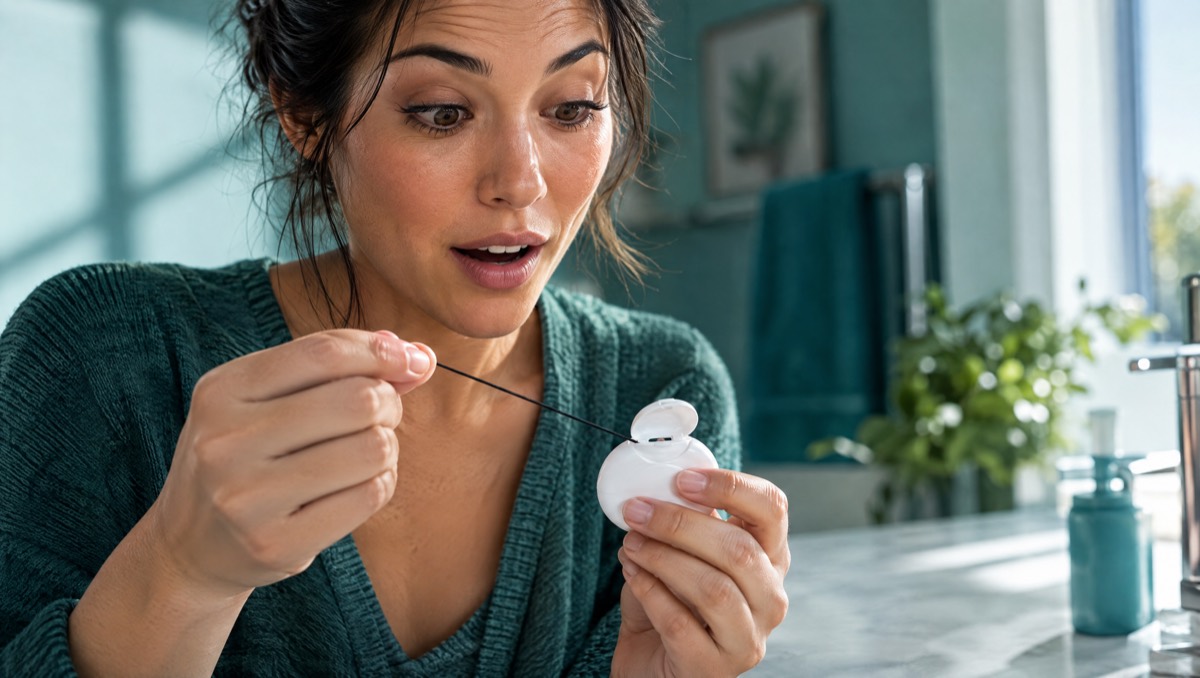
BURST Expanding Floss is a black, woven floss with a wax and xylitol coating that spreads out between teeth. It costs about $6.99 for 40 yards. The company says it removes twice as much plaque as unwaxed floss, but that claim comes from its own lab tests, not a published trial. It’s a good floss if you like it; it isn’t proven better.
Quick verdict
- Worth trying if you find thin floss cuts into your gums, you have small gaps or slightly open contacts, you want a PTFE-free floss, or the black color and flavor actually get you to floss every day.
- Skip it if your teeth are very tight and floss already snags, you’re on a tight budget, or you’re buying it because of the “2x plaque” claim alone.
- Budget alternative: an ordinary waxed nylon floss does the same basic job for less money. See our waxed vs unwaxed floss guide.
- The bottom line: a pleasant, well-made floss with marketing that runs ahead of the evidence.
What BURST Expanding Floss is
According to BURST’s product page, BURST Expanding Floss is:
- Woven from 300+ fibers that spread out as you use it, so the strand covers more of the tooth surface than a single tight strand.
- Black, so you can see the plaque and food you pull out.
- Coated with microcrystalline wax, xylitol and a mint eucalyptus flavor.
- Free of parabens, phthalates, BPA, Teflon (PTFE) and PFAS, according to the company. It’s also described as vegan.
- Sold as 40 yards in a refillable case made largely from recycled plastic.
Expanding floss isn’t a new idea. Several brands make woven or “puffy” floss designed to fluff out in wider gaps. BURST’s version stands out mainly for its color, coating and branding. We didn’t find BURST floss among ADA Seal of Acceptance products in our searches. The Seal requires a company to submit safety and effectiveness evidence for ADA review, and the program is voluntary, so a missing Seal doesn’t by itself mean a floss is unsafe.
Does BURST floss remove more plaque?
BURST says its floss removes 2x more plaque than regular unwaxed dental floss, removes up to 85% of plaque between teeth, and gives up to 58% plaque reduction on root surfaces just below the gumline. Each claim carries a footnote: “in laboratory tests; data on file.”
What that means for you:
- “Laboratory tests” usually means plaque-like material on model teeth, not people’s mouths over weeks. Lab results don’t always carry over to real-world gum health.
- “Data on file” means the study hasn’t been published where outside researchers can check it. We couldn’t find a peer-reviewed trial of BURST floss in PubMed or other searches.
- The comparison is with unwaxed floss, not with the waxed or PTFE floss most people buy.
That doesn’t mean the floss doesn’t work. It’s floss, and floss cleans between teeth. It means the “twice as effective” framing isn’t independently confirmed.
What the research says about floss in general
The ADA calls cleaning between your teeth an essential part of caring for your teeth and gums, because a toothbrush can’t reach the tight spaces between teeth. It also notes that waxed and unwaxed floss work about the same.
A 2019 Cochrane review of 35 trials found low-certainty evidence that flossing plus brushing may reduce gum inflammation (gingivitis) more than brushing alone. In the same review, interdental brushes (tiny brushes that fit between teeth) may have done better than floss for gingivitis, and water flossers may have helped gingivitis but not plaque in the short term. Most of the evidence was low quality.
In other words, the gap between one floss and another is probably small compared with the gap between flossing and not flossing. Our guide on how often you should floss covers how much is enough.
Xylitol coating and the PTFE-free angle
Xylitol. BURST says the xylitol coating helps fight cavities. Xylitol is a sugar alcohol that cavity-causing bacteria can’t use well, which is why it shows up in gum and some toothpastes. But we found no studies on xylitol-coated floss specifically. The small amount on a strand of floss is unlikely to make a measurable difference on its own. Fluoride toothpaste remains the main cavity-prevention tool the ADA recommends.
PTFE-free. Very slick “glide-style” floss is made from PTFE, part of the PFAS chemical family. One 2019 observational study linked one PTFE floss brand to higher blood levels of one PFAS. It showed an association, not proof that the floss caused it. If that concerns you, a floss that says it’s PTFE-free, including BURST or any waxed nylon floss, avoids the issue. Our waxed vs unwaxed floss post covers that study in more detail.
BURST floss vs regular floss
| BURST Expanding Floss | Regular waxed nylon floss | PTFE (glide-style) floss | |
|---|---|---|---|
| Build | Woven fibers that spread out | Twisted nylon strands with wax | Single smooth plastic band |
| Feel | Thicker and softer; fluffs up | Medium; slides well | Very slick and thin |
| Tight contacts | Can feel snug | Usually fine | Easiest to slide in |
| Shredding | Some users report fraying in tight spots | Less than unwaxed | Rarely shreds |
| PTFE / PFAS | Company says none | Usually none (check label) | Made of PTFE |
| Plaque evidence | Company lab data only | Standard floss research | Standard floss research |
| Price | About $6.99 for 40 yards (about 17¢/yard); $23.99 for a 4-pack | Usually less per yard; check the shelf tag’s unit price | Usually costs a bit more per yard than nylon |
BURST prices are from the company’s own store at the time of writing and may change; retailers may charge differently.
Some customer reviews on BURST’s own site mention the floss fraying or feeling too thick in tight spaces, while many others praise how clean it feels. These reviews aren’t independent, so treat them as a rough guide to fit, not cleaning power.
Who BURST floss suits, and who it doesn’t
It may be a good fit if you:
- Have small natural gaps, slightly open contacts, or gums that have pulled back a little, where a fuller strand can contact more surface.
- Find thin floss cuts into your gums or feels harsh.
- Want a PTFE-free floss with a pleasant flavor and like seeing what you’ve removed.
- Will actually floss more often because you like using it. That’s the biggest benefit any floss can offer.
It may not be the best fit if you:
- Have very tight teeth where floss already snags or shreds. A thinner waxed floss or PTFE floss is usually easier.
- Have wider gaps, bridges, implants or braces. Interdental brushes, floss threaders or a water flosser often work better. See floss picks vs floss and Waterpik vs floss.
- Are flossing on a budget. Basic waxed floss does the job for less.
When to see a dentist
See a dentist if your gums bleed every time you floss for more than a week or two, if your gums are swollen, tender, pulling back from your teeth, or if you notice bad breath that won’t go away. These can be signs of gum disease, which our bleeding gums guide explains. Also mention it if floss keeps shredding or catching in the same spot, since that can point to a rough filling edge, tartar or a cavity between teeth. Get prompt care for a loose tooth, pus around the gums, or facial swelling.
Frequently asked questions
Is BURST floss better than regular floss?
It hasn’t been shown to be. BURST says its floss removes twice as much plaque as unwaxed floss, but that comes from its own lab tests, not a published trial. Research on floss in general suggests that daily, careful use matters more than the brand or type. BURST may still be the better choice for you if you like it enough to use it every day.
Is BURST floss PTFE-free?
BURST says its expanding floss contains no Teflon (PTFE) or PFAS, and lists microcrystalline wax, xylitol and a mint eucalyptus flavor as its coating ingredients. We didn’t find independent testing of the floss for PFAS, so the claim rests on the company’s own labeling.
Why is BURST floss black?
The black color is meant to make it easy to see plaque and food debris you’ve removed. It doesn’t clean any better because it’s black, but some people find seeing the results motivating, which may help them floss more consistently.
Does BURST floss shred?
Many users say it holds up well, but some reviews on BURST’s own site mention fraying or a too-thick feel in tight spaces. Floss that shreds in the same spot every time can signal a rough filling or tartar, so it’s worth mentioning to your dentist whichever brand you use.
How much does BURST floss cost?
On BURST’s own site, a single 40-yard pack costs about $6.99 and a 4-pack about $23.99, roughly 15 to 17 cents per yard. That’s more per yard than most store-brand floss. Prices can change and may differ at other retailers.