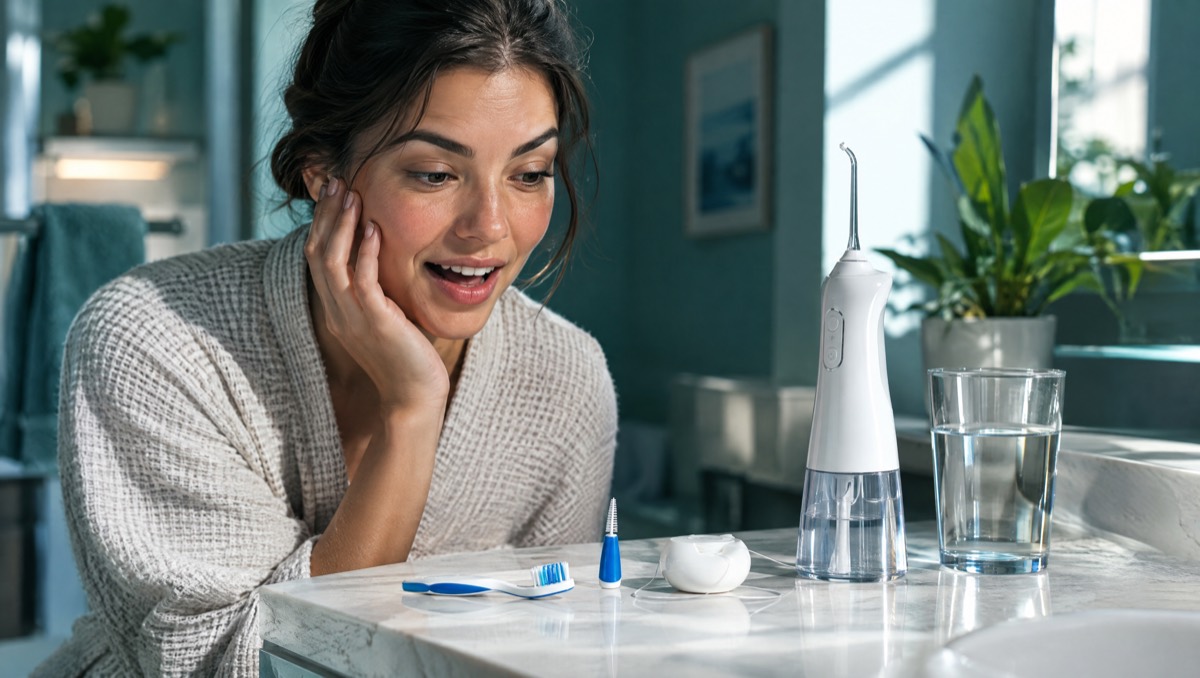
Taking care of braces comes down to three daily habits: brush with a soft-bristled brush and fluoride toothpaste after meals and before bed, clean between your teeth and under the wire at least once a day, and avoid hard or sticky foods that bend wires or pop off brackets. The right tools make each step faster.
Quick verdict
- Must-have: a soft-bristled toothbrush (manual or electric) and fluoride toothpaste.
- Best for cleaning under the wire on a budget: floss threaders or pre-stiffened orthodontic floss, a few dollars a pack.
- Best for gaps around brackets: small cone-shaped interdental brushes.
- Worth it if flossing is a daily fight: a water flosser. It makes the routine faster and is easier for many teens to stick with.
- Skip: hard-bristled brushes, toothpicks forced between brackets, and anything that promises to replace brushing.
Why cleaning with braces matters more
Brackets, wires and bands create dozens of small ledges where plaque collects and a toothbrush has trouble reaching. When plaque sits on enamel, the acid it makes pulls minerals out of the tooth surface. The AAO explains that this is what causes the chalky white marks some people find when their braces come off. Braces don’t cause the spots directly; plaque left around them does.
These spots are common. A 2025 meta-analysis of 57 studies estimated that a little over half of patients with fixed braces had white spot lesions, and that the risk rose with longer treatment. Gums also get puffy and bleed more easily when plaque builds up along the gumline. Good daily cleaning lowers both risks.
How to brush with braces
Cleveland Clinic advises brushing at least twice a day with a soft-bristled toothbrush and fluoride toothpaste, and the AAO adds that brushing after every meal or snack is ideal. A simple routine:
1. Rinse with water first to loosen food caught in the brackets. 2. Brush the gumline. Angle the bristles toward the gums at about 45 degrees and use small, gentle circles. 3. Brush above and below each bracket. Tilt the brush down to clean the top of each bracket, then tilt it up to clean underneath. 4. Brush the chewing surfaces and the backs of your teeth, the same as without braces. 5. Spend extra time on the upper front teeth. The AAO flags this area because white spots are especially visible there. 6. Check in the mirror. Clean brackets look shiny with clearly visible edges. Fuzzy or dull brackets need another pass.
Two minutes is the usual target, but most people with braces need a bit longer to reach every bracket. Our guide to how to brush your teeth covers the basic technique in more detail.
Manual or electric toothbrush?
Either can work. A 2025 systematic review of studies in people with fixed braces found that powered brushes had an edge for plaque when results were pooled, but most individual comparisons showed no clear difference, and the studies varied a lot. An earlier review of five trials found no significant difference at four or eight weeks.
In practice, a powered brush helps people who rush, brush too hard, or find it hard to angle a manual brush around brackets. If you go electric, choose a soft or orthodontic-style brush head and replace it every three months, because brackets wear bristles down faster; our guide to cleaning a toothbrush covers care in between. Our comparison of Oral-B vs Sonicare covers running costs for both major brands.
How to floss with braces
The AAO recommends flossing at least once a day. The wire blocks normal flossing, so you need a way to get floss under it.
- Floss threader: a flexible plastic loop. Pull a length of floss through the loop, push the stiff end under the wire between two teeth, then floss up and down along both teeth and under the gumline. Pull it out and move to the next space.
- Orthodontic floss (often sold as “super floss”): each strand has a stiff end that slides under the wire on its own, a spongy middle section for cleaning around brackets, and regular floss at the other end.
- Waxed floss slides more easily and is less likely to shred on brackets.
Threading floss takes a few minutes at first. Most people get faster within a couple of weeks. If your gums bleed when you start, that usually reflects plaque along the gumline, and it often settles as cleaning improves. Bleeding that doesn’t settle is worth mentioning to your dentist; our guide to bleeding gums explains the common causes.
Interdental brushes for braces
Interdental (also called interproximal) brushes are tiny cone- or cylinder-shaped brushes on a short handle. They slip between the wire and the tooth to sweep out plaque and food around each bracket, and through wider gaps between teeth. The AAO suggests using the interproximal brush your orthodontist provides to reach tight spaces. They are quick to use after meals, which makes them a good option away from home.
Choose a size that fits snugly without forcing. If it bends or you have to push hard, it’s too big.
Water flossers and braces
A water flosser sends a pulsing stream of water around brackets and between teeth. For people with braces, it is often the easiest way to flush out trapped food.
What the research shows: a 2025 systematic review and meta-analysis in Healthcare looked at orthodontic patients separately. Compared with brushing alone, adding a water flosser gave small improvements in plaque and gum bleeding over a few weeks. Compared with flossing, the differences were small and short-lived. The authors described the benefits as slight and the evidence as limited.
So a water flosser is a convenience that may help a little, especially for people who aren’t flossing at all. It works best alongside brushing and occasional threaded flossing, not instead of them. For a closer look at the trade-offs, see Waterpik vs floss.
Braces cleaning tools compared
| Tool | What it does best | Typical US price | Ongoing cost |
|---|---|---|---|
| Soft-bristled manual toothbrush | Daily brushing around brackets | About $2 to $6 | Replace every 3 to 4 months, sooner if frayed |
| Orthodontic (V-trim) toothbrush | Center bristles sit over brackets | About $3 to $8 | Same as a manual brush |
| Electric toothbrush | Consistent brushing with less effort | About $25 to $150 for most models | Brush heads, often about $5 to $15 each |
| Floss threaders | Getting floss under the wire | About $2 to $5 per pack | Cheap, but slow to use |
| Orthodontic floss (“super floss”) | Under the wire and around brackets | About $3 to $7 per pack | A pack lasts a few weeks |
| Interdental brushes | Around brackets and wider gaps | About $4 to $10 per pack | Replace when bristles flatten |
| Water flosser | Flushing food and plaque around brackets | About $40 to $100 | Replacement tips |
Prices are typical retail ranges and vary by brand, pack size and store. Many orthodontic offices hand out starter kits with a brush, threaders and interdental brushes, so check what you already have before buying.
Toothpaste, mouthwash and fluoride
Use a fluoride toothpaste every time you brush. Fluoride helps enamel resist the acid attacks that cause white spots, and the AAO suggests using any extra fluoride your dental team recommends. Cleveland Clinic also lists an alcohol-free antibacterial mouthwash as part of daily braces care. If you’re choosing one, our guide to mouthwash for gingivitis explains which ingredients do what.
Braces care beyond cleaning
- Watch what you eat. Hard, sticky and crunchy foods can break brackets and bend wires. The AAO’s list includes popcorn, nuts, ice, hard candy, caramel and crusty breads.
- Rinse with water after sugary or acidic drinks if you can’t brush right away, and drink water most often.
- Wear rubber bands exactly as prescribed. If you have them, our guide to rubber bands for braces explains what they do.
- Carry a small kit: a travel toothbrush, interdental brushes, floss and orthodontic wax.
- Keep regular dental cleanings during treatment, in addition to orthodontist visits.
Adults wearing braces follow exactly the same routine. Our guide to braces for adults covers cost and what to expect.
When to see a dentist
Call your orthodontist if a bracket comes loose, a wire breaks or pokes your cheek and wax doesn’t help, or a band feels loose. The AAO says a poking wire can often be pushed flat with a pencil eraser or covered with orthodontic wax until your visit. See your dentist if your gums bleed every day for more than a couple of weeks despite careful cleaning, if you notice white or brown spots on your teeth, or if a tooth becomes sensitive or painful. Get emergency care for heavy bleeding, swelling that spreads, or trouble breathing or swallowing.
Frequently asked questions
How do you take care of braces every day?
Brush with a soft-bristled toothbrush and fluoride toothpaste after meals and before bed, angling the bristles above and below each bracket. Clean between your teeth and under the wire at least once a day with a floss threader, orthodontic floss, interdental brushes or a water flosser. Avoid hard, sticky and crunchy foods, and keep your orthodontist and dental appointments.
What is the best toothbrush for braces?
Any soft-bristled toothbrush can work if you use it carefully. Orthodontic brushes have a V-shaped row of bristles that sits over the brackets. Electric brushes may give a small edge for plaque in people with braces, according to a 2025 review, and help people who brush too hard. Replace the brush or head every three months.
How do you floss with braces?
Thread floss under the wire using a floss threader, or use orthodontic floss that has a stiff end. Then floss up and down along each tooth and just under the gumline before moving to the next space. Waxed floss snags less on brackets. It takes longer at first, but most people speed up within a couple of weeks.
Can a water flosser replace flossing with braces?
Not fully. A 2025 review found that adding a water flosser to brushing gave small improvements in plaque and gum bleeding for orthodontic patients, while the difference compared with flossing was small. It’s a helpful, easier option, especially for people who skip flossing, but it works best alongside brushing and some threaded flossing.
How often should you brush your teeth with braces?
At least twice a day, according to Cleveland Clinic, and ideally after every meal or snack, as the American Association of Orthodontists recommends. Food and plaque collect around brackets quickly. When you can’t brush after eating, rinse your mouth well with water and brush as soon as you can.